






























1980 Federal Republic of Germany (West – Coldwar Era) “Kaiser Wilhelm Memorial Church Restoration” Commemorative Silvered-Bronze Alloyed-Medal. Excellent Cond. w. Patinaed Toning, Full Sharp Details! 100% Orig. 26.0 Grs. 40 mm abt. > 50 Yrs. Beauteous!
S$25

This exquisite numismatic object is a historic German commemorative donation medal, traditionally known as a Spendenmedaille, issued in the year 1980. It possesses a substantial physical presence, characterized by a diameter of 40 millimetres and a weight of 26 grams, dimensions that closely mirror the grand silver talers and exhibition medals of the nineteenth century. Crafted from a high-quality silvered-bronze alloy, the piece demonstrates an exceptional marriage of metallurgical durability and the refined, luminous surface qualities of precious metal plating. This historic donation piece was struck within the Federal Republic of Germany, widely known during the Cold War era as West Germany. This minting origin perfectly aligns with the geographical and political reality of the monument it honours, as the iconic church resides within the Charlottenburg district of Berlin, which at the time of issuance sat squarely inside the Western sector of the divided city. Over the decades, the silvered surface has matured elegantly, developing a nuanced and very lovely patina that greatly enhances its visual narrative, structural depth, and overall collectible appeal. The Obverse Exegesis: Imperial Portraiture and Epigraphy The obverse face of the medal features a meticulously executed, high-relief profile portrait of Kaiser Wilhelm I, the first Emperor of the unified German Empire, facing directly to the right. The engraver has captured the monarch in his twilight years with a striking degree of realism, emphasizing his resolute expression, deeply set eyes, and finely detailed hair. A defining feature of this portrait is the intricate rendering of the Emperor's iconic Backenbart, the flowing sideburns and full moustache that became synonymous with Prussian imperial dignity during his nineteenth-century reign. Wilhelm I is depicted wearing a formal Prussian military dress uniform, adorned with a high, rigidly structured collar featuring elaborate, deeply carved oak-leaf embroidery. A heavy ceremonial cloak is draped elegantly over his left shoulder, secured by a complex arrangement of braided cords and heavy tassels that spill downward across his chest in a display of classicizing military pomp. Pinned prominently to the lower drapery is the multi-pointed star of a high imperial order, likely the Order of the Black Eagle, which is rendered with crisp, geometric facets that catch the light beautifully across the planchet. Encircling the upper perimeter of the imperial portrait is a bold, capital-letter inscription in German reading, "EIN BEITRAG ZUR RETTUNG DER GEDÄCHTNISKIRCHE 1980." This translates into English as "A Contribution to the Rescue of the Memorial Church 1980." The typography is rendered in a clean, authoritative sans-serif style characteristic of West German minting in the latter half of the twentieth century, providing a sharp structural contrast to the late nineteenth-century historicist aesthetic of the central motif. The entire composition is framed by a dense, unbroken pearled border along the outermost rim, which serves to unify the epigraphy and the central image while imparting a classical, coin-like framework to the obverse design. The Reverse Composition: Architectural Majesty and Heraldry Turning to the reverse face of the medal, the viewer is presented with an extraordinarily detailed architectural vignette of the original Kaiser Wilhelm Memorial Church, or Kaiser-Wilhelm-Gedächtniskirche, as it appeared upon its completion in Berlin. The engraving showcases the primary western facade of the church in high relief, dominated by its monumental central spire which terminates in a delicate cross. The rendering captures the complex Neo-Romanesque architecture designed by Franz Schwechten, including the soaring gables, the prominent circular rose window situated above the main entrance portals, and the smaller flanking towers that gave the structure its uniquely imposing, fortress-like silhouette. Suspended directly above the apex of the central spire, floating across the inner linear border, is the German Imperial Crown, which underscores the direct royal patronage and dynastic significance tied to the building's erection. The architectural core is flanked on either side by two traditional heraldic shields that root the monument within its regional and political context. The shield on the left is divided quarterly, reflecting the historic coat of arms of the House of Hohenzollern, while the shield on the right features horizontal bars, symbolizing the broader territorial authority of the Prussian state and the province of Brandenburg. The text on the reverse is skillfully divided into two separate arcs to balance the verticality of the church towers. The upper arc displays the historical date "1. SEPTB. 1895," flanked by small, stylized rosettes, which commemorates the exact day the church was originally consecrated. The lower arc reads "GEDÄCHTNISS-KIRCHE," intentionally utilizing the archaic nineteenth-century German spelling with a double 'S' to maintain absolute historical fidelity to the era of the monument's dedication. Historical Trajectory: From Wilhelmine Consecration to Wartime Ruin To fully appreciate the cultural importance of this medal, one must explore the rich historical canvas that spans from the late nineteenth century to the closing decades of the twentieth century. The Kaiser Wilhelm Memorial Church was commissioned by Emperor Wilhelm II as a grand monument to honour his grandfather, Wilhelm I, who had passed away in 1888, and to serve as a symbol of Protestant piety and imperial unity. The selection of the consecration date, September 1, 1895, was deeply symbolic, as it coincided with the eve of Sedantag (Sedan Day), a major national holiday celebrating the pivotal German victory over France in 1870 that paved the way for the unification of the Empire. For decades, the church stood as one of the most magnificent landmarks in Berlin, boasting a tower that reached over one hundred and thirteen meters into the skyline. This architectural marvel met a tragic fate during the Second World War. In November 1943, during a series of intensive Allied bombing raids aimed at the heart of Berlin, the church was struck by high explosives and incendiary bombs, causing the roof to collapse and completely gutting the interior. Following the conclusion of the war, a profound debate arose regarding the future of the ruins. While some advocated for a complete reconstruction and others pushed for total demolition, a collective decision was made to preserve the fractured, sixty-eight-meter-tall remains of the main western spire as a permanent, sobering monument against the horrors of war. This ruined spire, affectionately dubbed "Der hohle Zahn" (The Hollow Tooth) by Berliners, was integrated into a striking modern church complex designed by the renowned architect Egon Eiermann between 1959 and 1963, becoming an international symbol of peace, reconciliation, and resilience. The 1980 Civic Preservation Campaign and West German Production By the late 1970s and entering into 1980, the surviving historical spire faced an existential crisis that threatened its very survival. Decades of exposure to harsh winter weather, atmospheric pollution, and the lingering internal structural trauma from the wartime bombardment had caused severe deterioration of the delicate stone masonry. Water had penetrated the porous brick and sandstone, leading to dangerous crumbling that made the tower structurally unstable and a potential hazard to the bustling public spaces of the Breitscheidplatz below. The city of Berlin and various civic organizations recognized that without immediate, highly specialized conservation intervention, this irreplaceable monument to human history would be lost forever. Because the monument stood in Charlottenburg, within the Western allied sectors of Berlin, the entire conservation campaign was deeply tied to the cultural, political, and financial life of the Federal Republic of Germany. In response to this crisis, a monumental public fundraising initiative was launched in 1980 to finance the extensive engineering and masonry work required to stabilize and secure the historic tower. This silvered-bronze medal was officially struck by a West German mint precisely for this campaign, serving as a prestigious Spendenmedaille or donation token presented to citizens, corporations, and philanthropists who contributed financial support to the preservation fund. Therefore, the medal is not merely a passive commemorative piece, but an active participant in the physical salvation of the landmark, representing the collective memory, civic pride, and dedication of the people of West Germany and West Berlin to safeguarding their architectural heritage during the height of the Cold War. Numismatic Aesthetic and the Patina From an artistic and numismatic standpoint, the choice of a silvered-bronze alloy for this specific design has yielded an extraordinary aesthetic result over the intervening decades. When a medal of this nature is struck, the high-relief areas receive a thin but brilliant layer of silver plating over the underlying bronze matrix. Over time, as the metal is exposed to ambient atmospheric conditions, a natural process of oxidation occurs, producing a deep, rich toning that cannot be replicated artificially. On this particular specimen, the results of this aging process are truly magnificent, creating a beautiful contrast that collectors highly prize. The raised, outermost surfaces of the design—including the crisp contours of Kaiser Wilhelm's facial features, the prominent folds of his military uniform, the lettering of the inscriptions, and the sharp ridges of the church spires—have retained their lighter, shimmering silver lustre due to gentle handling and light surface contact. Conversely, the deep, recessed fields of the planchet and the microscopic crevices within the Emperor's beard, the embroidered collar, and the complex Gothic window tracery of the church have collected a dark, soft charcoal-grey and slate-coloured oxidation. This natural chiaroscuro effect dramatically heightens the perceived depth of the engraving, lending a powerful three-dimensional quality to the high-relief sculpture. The soft, authentic patina acts as a visual certificate of age, imbuing a medal minted in West Germany in 1980 with the dignified, antique character of a nineteenth-century artifact, and perfectly mirroring the historical gravity of the monument it was designed to rescue. Please buy with confidence, our photographs are of the actual items for sale! Fairly priced! Thank you for the kind interest!
Deal method
Meet the seller

KEH Keh

Profile details
5.0
2742 reviews
12 years
on Carousell
5.0

Always happy to have a conversation with the seller while appreciating his collection.
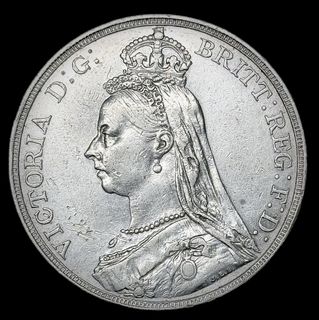
1891 United Kingdom Great Britain “St. George slaying the Dragon” Jubilee Queen Victoria ONE 1-Crown General Currency Silver Coin. Light Circulated w. Clear Sharp Details! 100% 38.61 mm 28.28 Grs. abt. > 135+ Yrs. Beauteous, Historical! Scarcely Avail.!
S$250

Returns and refunds

Safety policy
What others also search for
the guy she was interested in wasn't a guy at all
vintage singapore
omniscient reader's viewpoint
singapore medal
paper note
sg50 set
usd notes
charles
britannia silver
gold coin maple leaf
vintage coins singapore
vietnam
acrylic display
silver coin zodiac
double black johnnie walker 1l
wd external hard disk
tudor heritage black bay
max verstappen signed
huawei trifold
Similar listings

waywayup
7 days ago
Buyer Protection


stamptrust
24 days ago
Buyer Protection


stamptrust
24 days ago
Buyer Protection



phoenixrubyred
7 days ago
Buyer Protection

banknotes
16 days ago

henghenghenghengheng
27 days ago
maxwgh
9 days ago